

 English
 Español
 عربى
عربى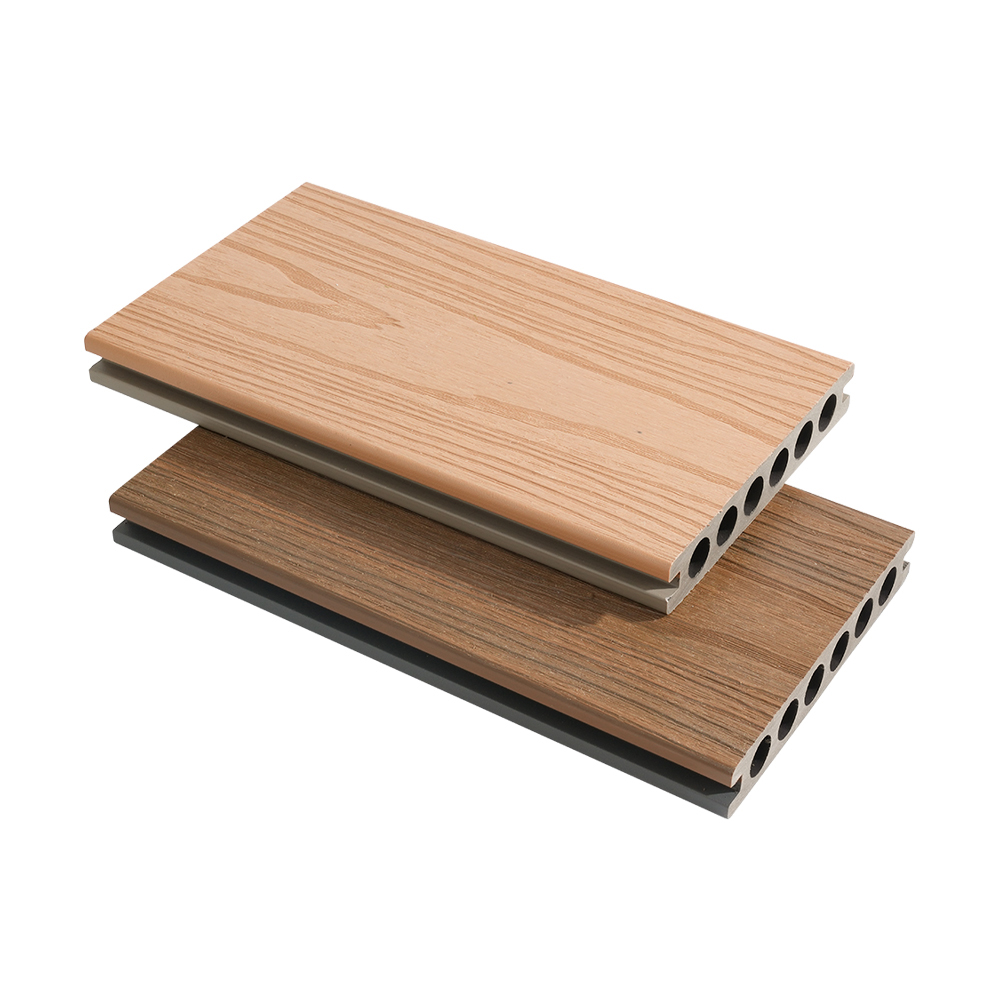
What Is Second Generation Co-extrusion Flooring? Second generation co-extrusion flooring is a composite outdoor decking system built with a dual-laye...
READ MORE
Clean air, a human right
The outdoor living industry has experienced a significant transformation over the past decade. Homeowners and commercial developers increasingly seek alternatives to traditional materials that offer superior durability, minimal maintenance, and aesthetic appeal. WPC flooring has emerged as the leading solution, combining the natural beauty of wood with the resilience of plastic compounds. This hybrid material is not just a trend; it represents a fundamental shift in how we approach decking and outdoor surface solutions.
What makes this material particularly compelling is its ability to address multiple consumer pain points simultaneously. Traditional wood requires constant maintenance, treats, and replacements. Standard composite materials often lack the authentic appearance homeowners desire. WPC flooring bridges this gap by delivering genuine wood aesthetics without the associated labor-intensive upkeep.
WPC, or wood plastic composite, is an engineered material created by blending wood fibers or wood flour with plastic polymers and chemical binders. This combination creates a dense, stable product that inherits the best qualities of both components. The typical composition ratio ranges from 40 to 60 percent wood fiber content, with the remainder being polyvinyl chloride or polyethylene-based plastics.
The manufacturing process involves heating and mixing these raw materials, then extruding them into planks or boards. This method allows for consistent quality control and the ability to incorporate color pigments and texture patterns that replicate authentic wood grain appearances. Unlike traditional wood, which has natural variations in density and grain, WPC products offer uniform structural properties across every plank.
Moisture Resistance: The plastic matrix prevents water absorption, making waterproof WPC flooring ideal for wet environments and humid climates.
Dimensional Stability: Minimal expansion and contraction even with temperature and humidity fluctuations, ensuring consistent performance year-round.
Resistance to Microbial Growth: The non-porous nature prevents mold, mildew, and fungal colonization that commonly affect traditional wood.
Structural Integrity: Inherent strength allows for longer plank spans without additional support structures.
Aesthetic Versatility: Manufacturers can produce dozens of wood-look finishes, from rustic to contemporary styles.
These properties combine to create a material that performs exceptionally well in diverse climates and usage scenarios, from coastal properties with salt spray exposure to inland areas experiencing freeze-thaw cycles.
Contemporary homeowners refuse to compromise between visual appeal and practical convenience. The trend toward WPC floor solutions reflects this desire for premium appearances without premium effort. Modern manufacturing techniques now allow WPC products to replicate high-end hardwood species with remarkable accuracy, including hand-scraped textures, varied grain patterns, and authentic color variations.
This trend particularly resonates with busy professionals and families who value their weekend time over maintenance schedules. Power washing twice yearly replaces the annual sealing, staining, and refinishing that traditional wood demands.
Environmental consciousness increasingly influences purchasing decisions. WPC products manufactured with recycled plastic content and sustainably harvested wood fibers appeal to eco-aware consumers. The reduced maintenance requirements also translate to lower chemical usage over the product's lifetime, as no toxic stains or sealers are necessary.
The extended lifespan of WPC decking, often lasting 20 to 30 years compared to 10 to 15 years for pressure-treated wood, means fewer replacements and less landfill impact. This lifecycle advantage contributes significantly to the material's sustainability narrative.
The development of advanced locking mechanisms has transformed installation processes. Click lock WPC flooring systems enable faster, tool-free installation in many applications, reducing labor costs and project timelines significantly. Contractors can install these products with minimal training, expanding the availability of professional installation services.
This accessibility trend has democratized decking projects, making premium outdoor spaces achievable for more homeowners and commercial properties. DIY enthusiasts appreciate the simplified installation process, while professional installers benefit from increased project volume and faster completion rates.
Rigid core WPC flooring represents the latest evolution in material technology. These products incorporate additional reinforcement layers that enhance stiffness and load-bearing capacity. The rigid core construction reduces deflection under weight, making these products suitable for high-traffic commercial applications and heavy furniture placement without visible depression or movement.
This innovation has expanded WPC applications beyond traditional residential decking into retail spaces, office buildings, hospitality venues, and transportation hubs. The structural reliability opens entirely new market segments.
WPC products excel in extreme weather conditions. Unlike traditional wood that splinters, warps, and rots when exposed to moisture, or composite materials that fade and become brittle under UV exposure, quality WPC flooring maintains structural integrity and appearance for decades. The material resists freeze-thaw damage, salt spray corrosion, and intense UV radiation without significant degradation.
Testing data consistently shows that WPC products maintain their dimensional stability across temperature ranges from minus 20 degrees Fahrenheit to 140 degrees Fahrenheit. This wide operating range makes them suitable for diverse geographical locations and seasonal variations.
The primary maintenance need for WPC flooring is occasional cleaning with water and mild detergent. No sealing, staining, sanding, or refinishing required. Homeowners simply rinse the surface annually or after heavy use, brush away debris, and the product remains visually and functionally intact. This minimal intervention transforms the cost-benefit equation dramatically over the product's lifetime.
| Material Type | Annual Maintenance Time | Annual Material Costs | Professional Service Needs |
|---|---|---|---|
| Traditional Wood | 40 to 60 hours | 500 to 1500 dollars | Yes, typically required |
| Standard Composite | 8 to 12 hours | 100 to 300 dollars | Occasionally |
| WPC Flooring | 2 to 3 hours | 0 to 50 dollars | Rarely needed |
Contemporary WPC products incorporate surface texturing that provides superior slip resistance compared to smooth wood or polymer surfaces. This feature proves particularly valuable around pools, in wet climate zones, and for installations serving elderly residents or families with children. The improved traction reduces accidents and increases confidence when walking on wet surfaces.
Manufacturers can produce WPC flooring in virtually any wood species appearance, color palette, and finish texture. Whether a project requires the warm honey tones of tropical hardwood, the cool grays of contemporary minimalism, or the rich chocolate browns of reclaimed barn wood, appropriate WPC options exist. This design flexibility allows architects and homeowners to realize their vision without compromise.
Surveys and real estate data indicate that quality outdoor living spaces significantly enhance property appeal and resale value. WPC decking projects frequently return 70 to 80 percent of installation investment through increased home value, particularly in competitive real estate markets. The perception of premium materials and worry-free maintenance attracts buyers willing to pay premium prices.
The most common application for WPC flooring remains residential outdoor spaces. Homeowners install these products on raised decks, ground-level patios, pool surrounds, and boardwalks. The combination of natural appearance with minimal maintenance makes WPC particularly attractive for primary residences where owners desire beautiful outdoor spaces without ongoing labor obligations.
Hotels, resorts, restaurants, and retail establishments increasingly select WPC flooring for outdoor dining areas, entryways, and recreational facilities. The durability withstands heavy foot traffic and weather exposure, while the professional appearance enhances customer experience. Commercial applications often leverage rigid core WPC flooring for superior structural performance under sustained use.
Parks, boardwalks, waterfront promenades, and community centers benefit from WPC flooring's vandalism resistance, durability, and environmental sustainability. Public agencies appreciate the reduced maintenance burden and extended lifespan, which translate to lower long-term ownership costs despite higher initial capital investment.
Rooftop terraces, balconies, wet spaces, and high-altitude installations all employ WPC flooring. The material's performance in challenging environments where traditional wood would fail or require extraordinary maintenance makes it the practical choice for specialized applications.
Proper substructure installation determines long-term performance. WPC flooring requires adequate air circulation beneath the surface to prevent moisture accumulation. Installers must ensure joists are properly spaced, typically 12 to 16 inches on center, and oriented perpendicular to the plank direction. Blocking or bracing may be necessary in areas with wide joist spans.
Modern WPC installation employs several connection strategies. Click lock WPC flooring systems allow planks to interlock without fasteners, creating a floating installation that accommodates seasonal movement. Traditional screwing methods work well for installations requiring maximum security. Some applications use adhesive methods suitable for ground-level installations.
Each connection method offers distinct advantages. Click-lock systems enable faster installation and easier replacement of individual planks. Screw fastening provides superior holding power for heavy-traffic applications. Adhesive methods work well for installations on concrete or prepared subgrades.
Although WPC exhibits minimal movement compared to wood, proper installation accounts for thermal expansion. Installers maintain small gaps around perimeter edges, allowing room for seasonal adjustment. In climates with extreme temperature variation, slightly larger gaps provide additional accommodation.
A typical residential deck installation using click-lock technology requires two to four days for a 300-square-foot area, depending on complexity, terrain, and substructure condition. Projects requiring structural repairs or complex layouts extend timelines accordingly. Professional installers complete work more efficiently than DIY efforts, though both approaches are viable.
Traditional wood remains the aesthetic baseline against which other materials are compared. However, wood's performance characteristics present significant disadvantages. Rot, insect damage, warping, splinters, and the constant maintenance requirement deter many modern homeowners. WPC delivers comparable or superior aesthetics while eliminating these pain points, making it the practical choice despite potentially higher initial cost.
Earlier composite products, typically formed from wood flour and plastic without modern reinforcement or protection, suffer from fading, staining, and limited design options. Contemporary WPC products represent a significant evolution, addressing these weaknesses through advanced manufacturing, UV-protective additives, and innovative locking systems. The performance gap between modern WPC and older composite products is substantial.
PVC vinyl products offer excellent weather resistance and durability but often appear plastic-like and artificial. They require different installation approaches and offer fewer design options. Many homeowners prefer WPC's authentic wood appearance, though vinyl alternatives work well for specific applications where durability and low maintenance trump aesthetic concerns.
Concrete and paving materials provide extreme durability but lack warmth and visual appeal. They crack in freeze-thaw environments and require regular maintenance. WPC offers superior aesthetics, comfort, and lower maintenance, making it preferable for applications where visual quality matters alongside functional requirements.
Progressive manufacturers incorporate recycled plastic from post-consumer waste into WPC formulations. This practice diverts materials from landfills while reducing virgin plastic consumption. Wood fiber components frequently derive from sustainable forestry operations or reclaimed sources, further enhancing the environmental profile. The ability to transform waste materials into high-performance flooring represents a circular economy principle in action.
Comprehensive lifecycle assessments comparing WPC flooring to traditional wood and other materials consistently demonstrate environmental advantages. While manufacturing WPC products requires energy input, the extended lifespan and minimal maintenance requirements result in substantially lower overall environmental impact over 25 to 30 years of use. The reduced chemical usage eliminates toxic sealing and treatment products from the equation entirely.
Modern WPC products are increasingly designed with end-of-life recyclability in mind. Many manufacturers have established take-back programs or partnerships enabling proper recycling or energy recovery. As technology advances, closed-loop recycling systems will further enhance the sustainability profile of WPC flooring products.
The enhanced durability and weather resistance of WPC flooring make it particularly suitable for regions experiencing increasingly extreme weather conditions. Properties installed with climate-resilient materials require fewer replacement cycles, translating to reduced resource consumption and environmental impact over extended timeframes.
WPC flooring typically costs 20 to 40 percent more than pressure-treated wood but substantially less than high-end hardwood alternatives. When accounting for installation complexity, substructure requirements, and accessory components, the price differential narrows considerably. Professional installation costs remain comparable across material types, further equalizing the total investment.
Over a 25-year ownership period, WPC flooring delivers superior value despite higher upfront cost. The elimination of maintenance expenses, reduced replacement frequency, and extended product lifespan dramatically lower lifetime costs. A homeowner replacing pressure-treated wood decking twice during this period while applying annual sealant and stain will invest considerably more in maintenance alone than the original WPC installation.
Bulk purchasing and commercial applications benefit from wholesale pricing structures. WPC flooring suppliers typically offer volume discounts that reduce per-unit costs significantly. Commercial projects spanning hundreds or thousands of square feet achieve pricing substantially below retail consumer rates, improving project economics for large installations.
Real estate professionals confirm that quality WPC decking installations enhance home value disproportionately to installation cost. Properties featuring premium outdoor spaces command price premiums, with 70 to 80 percent recovery of decking investment costs through increased property values at resale. This financial performance positions WPC as an attractive investment rather than merely an expense.
Research laboratories continue developing WPC formulations that enhance specific properties. Next-generation products will likely feature improved slip resistance, enhanced UV protection, modified acoustic properties, and refined aesthetics. Cryogenic processing and nano-material integration represent promising research directions that could yield significant performance enhancements.
Emerging innovations explore integration of embedded sensors and connectivity features within WPC flooring. Temperature monitoring, structural stress detection, and environmental sensors could provide real-time performance data and predictive maintenance alerts. While currently in development phases, smart flooring systems represent the next evolution in material technology.
Manufacturing capabilities continue advancing, enabling increasingly sophisticated surface textures, color variations, and special effects. Future WPC products will replicate exotic wood species with extraordinary accuracy while offering customization options currently unavailable. Digital printing technology may eventually enable bespoke designs on demand.
Specialized formulations target extreme climates, from arctic regions with severe freeze-thaw stress to tropical environments with intense UV exposure and salt spray. These targeted products will expand WPC applications into previously challenging environments where conventional materials struggle to perform.
Climate evaluation provides the foundation for material selection. Extreme freeze-thaw cycles require rigid core WPC flooring with superior structural properties. High-humidity coastal environments demand products with enhanced moisture barrier technologies. Intense UV environments benefit from premium UV-protective formulations. Understanding local climate patterns guides selection toward products engineered for optimal performance in specific conditions.
Application intensity influences material selection. Residential installations with moderate traffic and seasonal use can employ standard WPC products. Commercial applications with constant foot traffic benefit from rigid core options providing superior durability. Pool surrounds and wet environments require products with enhanced slip resistance and moisture management.
Visual preferences drive final selection among the extensive range of available finishes. Contemporary applications might favor cool gray tones, while traditional designs leverage warm honey or chocolate brown palettes. Texture preferences range from smooth contemporary finishes to hand-scraped rustic appearances. The extensive customization options enable virtually any aesthetic vision.
Installation preferences may influence material selection. DIY projects benefit from click-lock systems requiring minimal tools and expertise. Professional installations can leverage traditional fastening methods providing maximum security. Ground-level applications on prepared subgrades might employ adhesive systems. Understanding available installation approaches ensures selection of products matching your installation capabilities and requirements.
Total cost of ownership analysis should guide budget decisions. While premium options carry higher upfront costs, extended warranties and superior durability often justify the investment. Conversely, standard products deliver excellent value for applications where extreme durability requirements don't justify premium pricing. Realistic lifetime ownership planning produces more accurate financial comparisons than simple sticker price comparisons.
Quality WPC flooring products are engineered to perform reliably for 20 to 30 years under normal residential conditions. Commercial applications may see slightly shorter lifespans due to higher traffic volumes. The extended lifespan far exceeds traditional wood decking, which typically requires replacement every 10 to 15 years. Warranty coverage generally reflects expected product performance, with many manufacturers offering 20 to 25-year warranties on premium formulations.
Modern WPC flooring can be installed at ground level when proper moisture management and substructure preparation are employed. Ground-level installations require completely stable, well-draining subgrades with no water pooling risk. Adhesive installation methods work particularly well for ground-level applications on concrete or prepared surfaces. Elevated installations naturally provide superior drainage and air circulation, making them generally preferable, but ground-level installations are viable with appropriate planning.
Contemporary WPC products incorporate increasing percentages of recycled plastic and sustainably harvested wood materials. The extended product lifespan and minimal maintenance requirements result in lower overall environmental impact compared to traditional wood across a complete lifecycle analysis. Many manufacturers participate in take-back and recycling programs enabling proper end-of-life processing. While not perfectly zero-impact, WPC represents a substantially more sustainable choice than alternatives requiring constant maintenance, replacement, and chemical treatments.
Unlike wood flooring that can be sanded and refinished, WPC products typically cannot undergo complete refinishing. However, surface damage is uncommon due to material durability. Minor imperfections often blend with the varied wood-grain appearance. If significant damage occurs to individual planks, click-lock systems enable replacement of affected sections without disturbing surrounding material. Traditional fastened installations may require removal of multiple planks to access damaged boards. Prevention through proper installation and reasonable use remains preferable to attempting repairs.
SPC (Stone Plastic Composite) utilizes limestone powder and plastic polymers, creating a more rigid, dense product than WPC. SPC generally offers superior water resistance and stiffness but typically appears more plastic-like than authentic wood. WPC uses wood fiber content, delivering more natural wood aesthetics and warmth. Both materials excel in appropriate applications, with WPC preferred for aesthetic outdoor applications and SPC often selected for extreme wet environments or commercial high-traffic zones where water resistance supersedes aesthetic concerns.
WPC flooring generally costs 20 to 40 percent more than pressure-treated wood but significantly less than premium hardwoods or exotic species. Complete installed costs vary regionally and depend on project complexity, substructure requirements, and labor rates. While upfront cost exceeds basic wood options, lifetime cost calculations typically favor WPC due to eliminated maintenance expenses. Professional quotes accounting for regional factors, specific product specifications, and installation complexity provide accurate pricing for individual projects.
Quality WPC flooring is specifically engineered for family and pet use. The non-toxic materials used in formulation meet health and safety standards. The slip-resistant surface reduces accident risk for both children and elderly users. The splinter-free nature eliminates a major hazard associated with wood decking. Pet claws may occasionally mark the surface, though permanent damage is unlikely with standard-grade products. The durability ensures extended performance even under the wear and tear of active families and pets.
Maintenance is minimal and straightforward. Regular sweeping removes debris. Annual or semi-annual rinsing with water and mild detergent keeps the surface clean. No sealers, stains, oils, or protective treatments are necessary. For stubborn stains, soft-bristle brushes and appropriate cleaners work effectively without damaging the material. Snow and ice can be handled like any outdoor surface, using appropriate removal tools and avoiding extreme scraping. The lack of demanding maintenance routines represents a primary advantage over traditional wood or other high-maintenance materials.
Absolutely. WPC flooring performs exceptionally well in cold climates with regular freeze-thaw cycles. The material maintains dimensional stability across wide temperature ranges without cracking, warping, or splintering. The non-porous structure prevents ice dam formation or water-related damage common with wood. Salt-treated surfaces used for ice management don't degrade WPC material as they do wood. Cold climate installation is appropriate for virtually any WPC product, making it an excellent choice for northern regions.
Click-lock systems offer speed, ease of installation, and the ability to replace individual planks without affecting surrounding material. These systems suit DIY projects and quick professional installations. Screw-fastened methods provide maximum holding power and stability, preferred for high-traffic commercial applications and installations requiring absolute security. Adhesive systems work well for ground-level installations on concrete. Project requirements, budget, installation timeline, and personal preferences guide the selection between these methods. Consult installation instructions and professionals for specific recommendations based on individual project conditions.

What Is Second Generation Co-extrusion Flooring? Second generation co-extrusion flooring is a composite outdoor decking system built with a dual-laye...
READ MOREWhy Outdoor Decking Fails Earlier Than Expected Many outdoor floors look fine on the day they are installed, then start to show problems within a fe...
READ MOREWall panels have become one of the most popular cladding solutions in modern renovation. Homeowners, contractors, and first-time DIYers are drawn to ...
READ MORECan I install wall panels in a bathroom? The short answer is yes, provided you choose a moisture-resistant panel, prepare the wall correctly, and sea...
READ MORE
 No. 6, Nanyuan South Road, Tangyang Town Industrial Park, Dongtai City, China
 [email protected]
 +86-17388015349
Copyright © Jiangsu Xuanhui New Material Technology Co., Ltd. All Rights Reserved.Custom Wood Plastic Composite Environmentally Friendly Materials Factory

