

 English
 Español
 عربى
عربىWhat is WPC Flooring and Why Manufacturers Choose Factory Direct Sourcing When searching for reliable flooring solutions, procurement professionals a...
READ MORE
Clean air, a human right
When searching for reliable flooring solutions, procurement professionals and contractors face a critical decision: work through distributors or establish direct relationships with WPC factory sources. Understanding the product itself is the foundation of making an informed choice. WPC, or wood plastic composite, represents a category of engineered flooring that combines wood fibers, recycled plastic, and stabilizers into a unified, durable material. Unlike traditional hardwood or laminate, this hybrid approach delivers benefits across waterproofing, durability, and cost efficiency that appeal to both residential and commercial applications.
The appeal of direct factory sourcing lies in transparency, control, and economics. When you work directly with a WPC flooring manufacturer rather than through middlemen, you gain insight into production processes, material selection, and quality checkpoints. You also access pricing that reflects actual manufacturing costs, not layered markups. For businesses planning large-scale projects—whether renovating hotel chains, office complexes, or residential developments—this difference compounds significantly.
WPC flooring consists of a core layer made from wood fibers and polyvinyl chloride (PVC) or polyethylene (PE) combined under heat and pressure. This core—often called the "foam core" or "rigid core"—provides structure and comfort underfoot. Above this sits a wear layer, typically 0.3mm to 0.7mm thick, which resists scratches, UV fading, and staining. Below the core lies a backing layer that enhances stability and sound dampening. The combination creates a product that feels warmer and quieter than hard alternatives while maintaining water resistance.
Buyers often confuse these three categories because they occupy overlapping market space. Understanding their distinctions guides specification decisions:
| Characteristic | WPC Flooring | SPC Flooring | LVT Flooring |
|---|---|---|---|
| Core Material | Wood fiber + PVC (foamed) | 100% rigid PVC | PVC layers (no foam) |
| Density | Lower, more flexible | Higher, rigid | Medium |
| Underfoot Feel | Warmer, quieter, softer | Hard, minimal give | Moderate comfort |
| Sound Dampening | Excellent | Minimal | Moderate |
| Water Resistance | Very high | Very high | Very high |
| Typical Price Range | Mid-range | Premium | Budget to mid |
WPC's foamed core is its signature advantage: it absorbs sound, provides thermal comfort, and reduces impact stress on joints during extended standing. For bathroom and kitchen applications, all three categories resist moisture, but WPC's structure makes it particularly suited to environments where comfort and noise reduction matter alongside waterproofing.
A modern WPC factory operates under strict capacity benchmarks that reflect both capability and reliability. Leading manufacturers maintain multiple extrusion lines operating simultaneously, each capable of processing raw materials into continuous sheets at speeds measured in meters per minute. Annual production capacity typically ranges from 5,000 to 50,000 tons depending on facility scale and equipment investment. This diversity matters for buyers: smaller orders can be accommodated without requiring minimum quantities that force over-purchasing, while large-scale contracts maintain consistent delivery schedules because multiple production streams prevent bottlenecks.
The extrusion process itself defines product quality. Raw materials—wood fiber sourced from sustainably managed forestry operations or reclaimed wood, virgin and recycled PVC or PE, and chemical stabilizers—are precisely metered and fed into extruders heated to 170–200 degrees Celsius. The molten compound flows through dies that shape it into the intended profile: whether that means a 4mm rigid core for commercial flooring or a 5mm foamed core for residential comfort. Temperature control, feed rate, and die design collectively determine density, stability, and dimensional accuracy.
After extrusion, the material cools on calibrated conveyors, often passing through embossing stations that create surface texture for visual authenticity and slip resistance. This is where "in-mold decoration" or "printed wear layers" come into play: photographic images of wood grain, stone, or tile are laminated onto the cooling material, creating the aesthetic appeal that influences final purchasing decisions.
Direct factory sourcing gives buyers access to quality control checkpoints that intermediate distributors cannot replicate or verify. Reputable WPC manufacturers implement staged inspection protocols:
Incoming Material Testing: Raw materials are tested for moisture content, particle size distribution, and polymer viscosity before entering production. Batches failing specifications are rejected or reworked.
In-Process Monitoring: Temperature sensors, pressure gauges, and visual inspections track extrusion continuously. Operators halt production immediately if parameters drift beyond tolerance, preventing defective batches from advancing.
Dimensional Verification: Thickness, width, and length are measured on every piece or on statistical samples, depending on production volume. Click-lock systems are tested for engagement force and durability through mechanical cycles.
Surface Quality Assessment: Samples are visually and tactilely evaluated for scratches, dents, printing misalignment, and texture consistency. Standards typically allow defect rates below 1-2 percent.
Water Absorption Testing: Samples are submerged for 24 hours and weighed to confirm water absorption remains below specified thresholds—usually under 0.5 percent by weight. This directly verifies the "waterproof" claim.
Durability Testing: Samples undergo simulated foot traffic using falling dart or impact tests, and wear layers are abraded according to EN 13329 standards to confirm scratch resistance ratings.
Certifications validate these processes. ISO 9001:2015 certification confirms that a factory maintains documented quality management systems. CE marking under European Building Products Regulation indicates compliance with performance, safety, and health criteria. SGS, TUV, or similar third-party audits provide independent verification. For buyers conducting due diligence, requesting test reports for specific batches—not just certificates—demonstrates a factory's transparency and commitment to accountability.
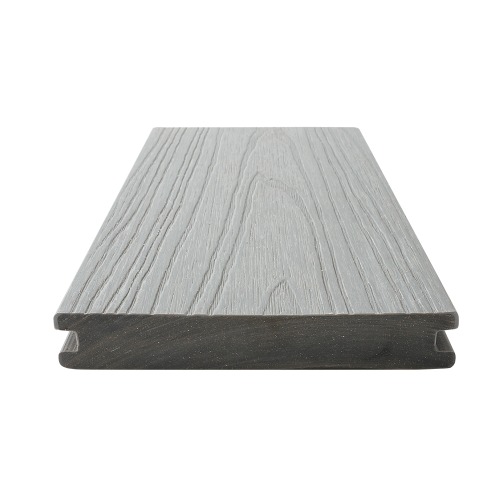
One compelling reason to work directly with manufacturers is access to customization at scale. While distributors offer standard product lines, factories can modify multiple parameters to align with project specifications:
Wear Layer Thickness: Residential products may specify 0.3-0.5mm wear layers for cost optimization; commercial projects often require 0.7mm or thicker for extended durability in high-traffic zones.
Core Composition: Adjusting wood fiber percentage or recycled plastic ratios changes cost, density, and thermal properties without sacrificing performance.
Surface Finishes: Embossing patterns can be deepened or softened, print designs can be customized, and surface treatments (matte, semi-gloss, high-gloss) can be specified for different environments.
Edge Profiles: Click-lock system designs can be modified; bevel edges can be narrowed or widened to match aesthetic preferences.
Color Ranges: From light oak tones to dark walnut, gray concrete looks, or tile-inspired patterns, manufacturers can produce custom colorways for branded projects or market differentiation.
Backing Layers: Noise-reducing cork or rubber backings can be applied; moisture barriers can be enhanced for bathrooms; radiant heat compatibility can be engineered into backing systems.
For substantial orders, factories often establish dedicated production runs where these customizations are standard. This eliminates waste, ensures consistency across shipments, and provides cost advantages compared to buying standard products and applying finishing touches downstream.
Wear layer thickness is one of the most visible price drivers. A 0.3mm wear layer costs approximately 10-15 percent less than 0.5mm, which in turn costs 15-20 percent less than 0.7mm. However, this is not a purely price optimization exercise. Thicker wear layers directly extend floor lifespan in high-traffic areas. A residential bedroom floored with 0.3mm wear layer may outperform expectations for 10-12 years with minimal scuffing; the same floor in a commercial hallway might show visible wear within 3-4 years. Conversely, a 0.7mm wear layer in a bedroom represents over-specification and wasted investment. Strategic buyers align wear layer thickness with projected traffic intensity and replacement cycles.
Core density—measured in kg per cubic meter—ranges from 650 kg/m3 (softer, more comfortable) to 950+ kg/m3 (firmer, more stable). Lower-density cores use more wood fiber and less PVC, reducing raw material costs but potentially increasing moisture susceptibility if quality control lapses. Higher-density cores are more durable but heavier, increasing shipping costs. Premium manufacturers invest in virgin-grade PVC and certified wood fiber, while budget-conscious suppliers accept recycled materials with higher contamination risk. The difference manifests over time: premium cores resist cupping and warping in humid climates; budget cores may develop visible defects within 2-3 years.
Material sourcing also affects environmental profile and regulatory compliance. Buyers subject to carbon accounting or sustainability reporting should inquire about recycled content percentages and forest certification of wood sources. This information influences pricing—recycled PVC is usually cheaper than virgin, but virgin material often meets stricter regulatory thresholds.
Minimum Order Quantity (MOQ) structures vary by factory. A typical range is 2,000-5,000 square meters per order, though established partners often negotiate smaller quantities. Larger orders (20,000+ square meters) unlock volume discounts of 5-12 percent per square meter. Shipping terms determine cost allocation:
FOB (Free on Board): Factory handles loading; buyer pays international shipping, insurance, and customs. Provides price transparency but requires import logistics expertise.
CIF (Cost, Insurance, Freight): Factory includes shipping to destination port; buyer pays import duties and final-mile delivery. Higher all-in cost but simpler administration.
DDP (Delivered Duty Paid): Factory bears all costs and risk; buyer receives flooring at facility. Premium pricing but zero logistics burden on buyer side.
For reference, shipping costs per square meter typically range from 8-15 USD depending on destination, distance, and container consolidation. A 40-foot container holds approximately 15,000-18,000 square meters, depending on packaging density. Buyers should request itemized quotes—material cost, packaging, FOB price, estimated shipping, insurance, and landed cost—to evaluate total value accurately.
Request a precise WPC flooring quotation based on your specific project requirements: submit wear layer thickness, core density, finish type, order volume, and destination to receive a binding estimate.
WPC's waterproof core and click-lock engineering make it one of the few engineered flooring options truly suitable for wet environments. Water absorption below 0.5 percent means spills, splash zones, and even minor flooding don't cause swelling or structural failure. Unlike hardwood, which warps irreversibly when saturated, WPC recovers its form as moisture evaporates.
However, installation practices matter. Subfloors must be leveled to within 3mm over 3 meters—uneven substrates leave gaps between planks and subfloor, allowing water intrusion. In bathrooms, consider installing WPC over a moisture barrier or waterproof underlayment, particularly in areas directly surrounding tubs or showers where water saturation is chronic. Grout lines and gaps between planks should be sealed with moisture-resistant sealant. This transforms WPC into a system, not just a product, that performs reliably in high-moisture environments.
For kitchens with potential oil spills and heavy foot traffic, WPC is equally appropriate. Its scratch-resistant wear layer resists marks from dropped utensils and heavy appliances, while the waterproof core handles liquid spills without risk of delamination or mold growth beneath the floor.
Most WPC flooring uses a click-lock mechanism (often called a "drop-lock" or "angle-click" system depending on exact engineering) that allows dry, adhesive-free installation. Planks interlock along their length and width, creating a floating floor that sits atop the subfloor without being permanently fastened. This approach offers several advantages: faster installation, easier removal and replacement if a plank is damaged, and reduced labor costs. A skilled installer lays 300-400 square meters per day; traditional glue-down methods achieve 150-200 square meters.
Installation best practices include:
Acclimate flooring in the installation space for 24-48 hours before opening boxes, allowing core to adjust to local humidity and temperature.
Verify subfloor flatness using a straightedge. Low spots over 1-2mm can create hollow sounds and reduced plank stability; sand down high spots and fill voids with leveling compound.
Install underlayment—2-3mm thick closed-cell foam or cork provides acoustic dampening and moisture protection beneath the flooring layer.
Begin installation in the longest, straightest wall, working perpendicular to natural light direction so seams are less visible.
Maintain a 5-10mm expansion gap at all walls and fixed objects, allowing the floating floor to move slightly with humidity and temperature changes without buckling.
Use spacers to maintain consistent gaps; remove them after installation is complete and install trim to cover gaps.
For large installations spanning multiple rooms, install transitions (T-moldings or threshold strips) every 8-10 meters to allow independent movement of disconnected floor sections.
The click-lock system is designed for precise engagement: clicking pieces together too forcefully can damage locking teeth, while insufficient pressure leaves gaps. Training installers on manufacturer specifications prevents costly mistakes.
When you contract directly with a manufacturer, you gain visibility into production schedules. Typical lead times are 3-5 weeks from order confirmation to container shipment, assuming standard specifications and MOQ compliance. Expedited orders may be accommodated at surcharge rates (typically 15-25 percent premium) if production capacity allows. This predictability is invaluable for project timelines: contractors can commit to installation dates with confidence, knowing materials will arrive as specified.
Distributors and middlemen introduce uncertainty: they hold variable inventory, manage multiple suppliers, and often resort to backorder communications when projects overlap. Direct relationships eliminate these layers, giving you first access to available production capacity and flexibility to adjust orders based on real-time project needs.
Export packaging also merits attention. Flooring destined for international shipment is wrapped in moisture-resistant film, palletized, and containerized to survive temperature fluctuations and humidity exposure during transit. Professional factories invest in packaging standards that prevent warping, scratches, and water damage—all common complaints when cheaper packaging alternatives are used. Inspect sample packaging arrangements during factory visits or request photos of containerization before shipment.
Reputable WPC manufacturers operate dedicated export sales teams with English-language capability and flexible availability. A legitimate factory acknowledges inquiries within 24 hours, provides detailed technical data sheets, and responds to specification questions without defensiveness. This responsiveness indicates operational maturity and customer-centric culture—predictors of reliable partnership.
After-sales support addresses real challenges that emerge post-installation. Occasional planks may arrive damaged despite quality control; flooring may exhibit unexpected movement patterns if subfloor conditions differ from specifications; expansion gaps may require adjustment. Professional factories provide technical guidance, arrange replacement shipments for documented defects, and sometimes dispatch technical representatives to troubleshoot on-site installation issues. This support prevents project stoppages and relationship breakdowns.
Contact our team to discuss your project requirements, access a complimentary sample kit demonstrating available finishes and locking mechanisms, and receive factory-direct pricing based on your specifications. We prioritize transparent communication and technical partnership with every inquiry.
Standard MOQ ranges from 2,000 to 5,000 square meters per order. Some factories accommodate smaller volumes (500-1,000 square meters) at premium pricing, particularly for established accounts or sampler orders. Conversely, orders exceeding 20,000 square meters often unlock volume discounts of 5-12 percent. Discuss your specific volume with the supplier to confirm MOQ and pricing tiers applicable to your project.
Most reputable factories provide sample planks or small sample kits (typically 1-3 square meters of various finishes) at no charge or minimal cost when you submit a formal inquiry. Samples allow you to evaluate color, texture, click-lock engagement, and core quality before committing to full orders. Request samples be shipped with sufficient time for evaluation; quality-conscious factories may send multiple colorways or wear layer options if you specify comparative interests.
Primary certifications include ISO 9001:2015 (quality management), CE marking under European Building Products Regulation, and EN 13329 (solid resilient floor coverings specification). Additional certifications like FloorScore or similar indoor air quality standards address formaldehyde emissions and indoor environmental health. Request test certificates from accredited third-party laboratories—not just generic brand claims—to verify compliance. If your project requires specific performance standards (wear ratings, slip resistance, fire performance), confirm the flooring specification before ordering.
Physical inspection reveals critical differences. High-quality WPC displays consistent color throughout the core (no dark streaks or discoloration suggesting contaminated recycled material). The click-lock system engages smoothly without grinding or excessive force. Density feels substantial when held; lightweight planks often indicate excessive recycled content or inadequate core composition. Request water absorption test results and ask about raw material sourcing—virgin vs. recycled percentages. Inspect factory documentation, quality certifications, and request references from existing customers. If a factory refuses to provide test data or technical specifications, that reluctance itself is a warning sign.
The most frequent mistakes are inadequate subfloor preparation, insufficient expansion gap spacing, and improper underlayment selection. Subfloors with high spots over 2-3mm create hollow sounds and stress locking mechanisms. Expansion gaps narrower than 5mm or wider than 15mm cause buckling or visible seams. Using standard foam underlayment instead of closed-cell or moisture-barrier options in wet areas allows water intrusion beneath the floating floor. Finally, heavy furniture placement in the first 48 hours before the click-lock system fully settles can misalign planks. Communicate these requirements clearly to installation contractors and provide manufacturer guidelines in writing.
WPC is compatible with radiant heating, but thermal conductivity matters. Thicker cores and dense backing layers reduce heat transfer efficiency; thinner, lower-density cores conduct heat more readily. When specifying flooring for radiant systems, confirm with the factory that products are rated for radiant heating compatibility and verify maximum surface temperature tolerance (typically 27-28 degrees Celsius). Using engineered underlayment designed for radiant systems further optimizes performance. If radiant heating is part of your specification, communicate this requirement early to ensure the factory provides appropriate product variants.
In residential environments with normal family use, WPC typically performs reliably for 12-15 years before visible wear becomes noticeable. In commercial settings with heavy traffic, expected lifespan is 8-12 years depending on wear layer thickness and maintenance rigor. Thicker wear layers (0.7mm+) extend this timeline by 2-4 years. Regular cleaning and prompt spill cleanup extend lifespan further. Factors like direct sunlight exposure, temperature fluctuations, and humidity stability also influence durability. Manufacturers typically provide 5-10 year warranties covering manufacturing defects, though these do not cover wear, damage from moisture intrusion, or normal aging.
WPC contains PVC or polyethylene and wood fiber; concerns sometimes arise about plastic off-gassing and chemical content. Quality manufacturers use stabilizers and formulations compliant with EU environmental regulations and VOC (volatile organic compound) limits. Certifications like FloorScore or GreenGuard Gold indicate low emissions. Recycled content in WPC is an environmental benefit, diverting plastics from landfills. However, if your project demands extreme environmental specification (natural materials only, no PVC), WPC is not the optimal choice—solid wood or natural linoleum would be more aligned. Communicate environmental priorities to the factory so they can recommend product variants matching your values.

What is WPC Flooring and Why Manufacturers Choose Factory Direct Sourcing When searching for reliable flooring solutions, procurement professionals a...
READ MOREChoosing between MDF and wood wall panels is rarely a simple preference for one material over the other. The right choice depends on the room, the cl...
READ MOREThe Rise of WPC Composite Decking in Today's Market The outdoor living industry has experienced a significant transformation over the past decade. Ho...
READ MOREWood-plastic composite decking has revolutionized outdoor living spaces by combining the aesthetic appeal of natural wood with the durability of mode...
READ MORE
 No. 6, Nanyuan South Road, Tangyang Town Industrial Park, Dongtai City, China
 [email protected]
 +86-17388015349
Copyright © Jiangsu Xuanhui New Material Technology Co., Ltd. All Rights Reserved.Custom Wood Plastic Composite Environmentally Friendly Materials Factory

