

 English
 Español
 عربى
عربىWhy Outdoor Decking Fails Earlier Than Expected Many outdoor floors look fine on the day they are installed, then start to show problems within a fe...
READ MORE
Clean air, a human right
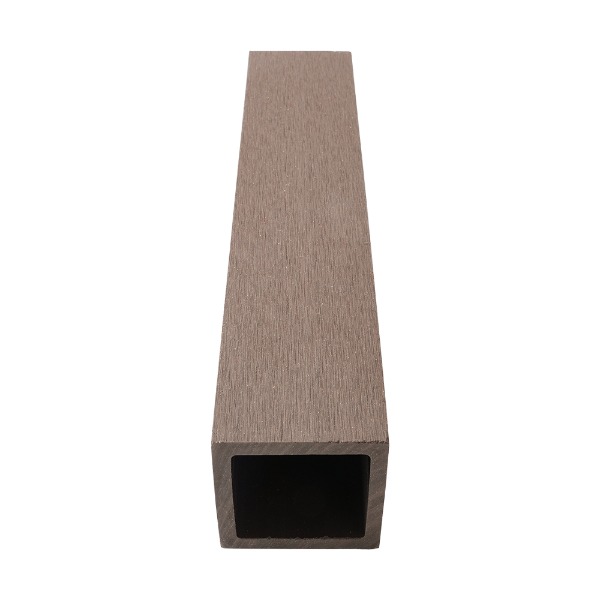
Choosing the correct square tube gauge is one of the most important decisions when selecting composite construction materials. Whether used in outdoor structures, decorative frameworks, partitions, or light structural applications, the right gauge directly affects performance, durability, and installation efficiency.
Modern square tube products are commonly manufactured from a blend of wood fiber, bamboo powder, straw fiber, and thermoplastic plastics such as PE, PP, and PVC. This material combination creates products that combine the natural appearance of plant-based fibers with the weather resistance and stability of engineered polymers.
For beginners, understanding gauge selection may seem complex. However, by focusing on structural requirements, environmental exposure, and installation goals, selecting the proper square tube becomes much easier.
Square tube gauge refers to wall thickness. A lower gauge number generally indicates a thicker wall, while a higher gauge means thinner walls.
Wall thickness determines how a square tube performs under stress, load-bearing pressure, environmental expansion, and long-term wear.
The right gauge ensures:
Choosing incorrectly may lead to over-engineering, unnecessary material cost, or insufficient structural integrity.
Unlike metal tubing, composite square tube performance depends heavily on material formulation.
A typical square tube consists of:
| Material Component | Function |
|---|---|
| Wood fiber | Provides natural texture and stiffness |
| Bamboo powder | Enhances strength and density |
| Straw fiber | Improves lightweight balance |
| PE / PP / PVC | Adds moisture resistance and flexibility |
This balanced composition offers several practical advantages:
The gauge works together with these material properties to deliver reliable structural performance.
Different gauge levels suit different project demands.
| Gauge Type | Wall Thickness Characteristic | Typical Application |
|---|---|---|
| Heavy gauge | Thick wall construction | Structural framing, load support |
| Medium gauge | Balanced performance | Decorative frames, railings |
| Light gauge | Lightweight construction | Panels, trim structures |
Heavy-gauge square tube provides greater rigidity and impact resistance. It is ideal where mechanical strength matters.
Medium-gauge products offer versatility and are widely used across residential and commercial installations.
Light-gauge square tube reduces weight and installation effort while maintaining visual consistency.
Selecting the ideal square tube gauge requires evaluating several practical factors.
The first consideration is structural demand.
If the square tube supports weight, resists pressure, or serves as part of a framework, thicker walls are typically recommended.
Examples include:
For non-load decorative applications, lighter gauge options are often sufficient.
Installation environment strongly affects gauge choice.
Outdoor applications face:
A thicker square tube often offers improved long-term dimensional stability under these conditions.
Indoor projects generally allow more flexibility in gauge selection.
Fastening and assembly methods matter.
If the square tube will be:
A medium or heavy gauge usually provides better holding strength and reduces installation damage.
Light gauge works well for simplified decorative attachment systems.
Aesthetic goals also influence square tube selection.
Heavier walls create a stronger visual presence and often suit modern architectural designs.
Lighter profiles deliver:
The best choice balances appearance and structural performance.
A common beginner mistake is assuming thicker is always better.
While heavy-gauge square tube offers greater strength, it may increase:
The most efficient choice matches performance to actual project requirements.
| Selection Priority | Recommended Gauge |
|---|---|
| Maximum strength | Heavy gauge |
| Balanced versatility | Medium gauge |
| Lightweight aesthetics | Light gauge |
Proper specification avoids unnecessary expense while maintaining reliable performance.
Not all square tube products deliver the same performance.
When evaluating options, check for:
Uniform wall thickness
Consistent structure ensures predictable strength.
Smooth internal and external surfaces
Indicates controlled manufacturing quality.
Dense material structure
Improves load resistance and dimensional stability.
Color consistency
Suggests proper material blending and processing.
Clean cut edges
Reflect stable extrusion quality.
These details reveal whether a square tube has been produced under controlled manufacturing standards.
Because of their balanced strength and durability, composite square tube products are used widely across modern projects.
Common uses include:
Their resistance to moisture and environmental wear makes them practical where traditional timber may struggle.
Choosing the right square tube gauge is not about selecting the thickest option available. It is about understanding project demands and matching wall thickness to structural purpose, environmental exposure, and design goals.
Composite square tube products made from wood fiber, bamboo powder, straw fiber, and PE, PP, or PVC offer an excellent balance of durability, appearance, and long-term reliability.
For beginners, focusing on load needs, installation conditions, and material consistency will lead to better decisions and more successful project outcomes.
1. What is the best square tube gauge for outdoor applications?
Medium to heavy gauge is typically preferred because it offers better dimensional stability and weather resistance.
2. Is thicker square tube always stronger?
Generally yes, but excessive thickness may increase cost and weight unnecessarily if the project does not require extra strength.
3. Can composite square tube replace traditional wood?
Yes. It offers improved resistance to moisture, insects, and cracking while maintaining a natural appearance.
4. Which plastic material performs best in square tube manufacturing?
PE, PP, and PVC each provide distinct benefits. Selection depends on flexibility, environmental resistance, and application needs.
5. How can beginners identify quality square tube products?
Look for uniform wall thickness, smooth surfaces, consistent color, dense structure, and precise cut edges.

Why Outdoor Decking Fails Earlier Than Expected Many outdoor floors look fine on the day they are installed, then start to show problems within a fe...
READ MOREWall panels have become one of the most popular cladding solutions in modern renovation. Homeowners, contractors, and first-time DIYers are drawn to ...
READ MORECan I install wall panels in a bathroom? The short answer is yes, provided you choose a moisture-resistant panel, prepare the wall correctly, and sea...
READ MOREWhen you search for a "wpc factory" online, you are not just looking for any supplier. You are hunting for a partner who can deliver consistent qual...
READ MORE
 No. 6, Nanyuan South Road, Tangyang Town Industrial Park, Dongtai City, China
 [email protected]
 +86-17388015349
Copyright © Jiangsu Xuanhui New Material Technology Co., Ltd. All Rights Reserved.Custom Wood Plastic Composite Environmentally Friendly Materials Factory

