

 English
 Español
 عربى
WPC PROCUREMENT GUIDE Making Better Decisions When Sourcing Wood-Plastic Composite Products How can importers, construction contractors and property ...
READ MORE
Clean air, a human right
Property owners, landscape designers and procurement teams are rethinking outdoor boundaries. Solid timber rots, metal rusts and plain plastic can turn brittle under strong sunlight. WPC fencing has emerged as a practical middle ground, combining the warm look of wood with the moisture resistance and low upkeep of engineered composites.
Among the available formats, co-extruded profiles deserve closer attention. Instead of a single mixed body, a co-extruded board bonds a wood-plastic core to a dense outer shell during one continuous production pass. This structure gives the surface a stronger defense against ultraviolet exposure, staining and abrasion, which are the main reasons composite boards fail early in the field.
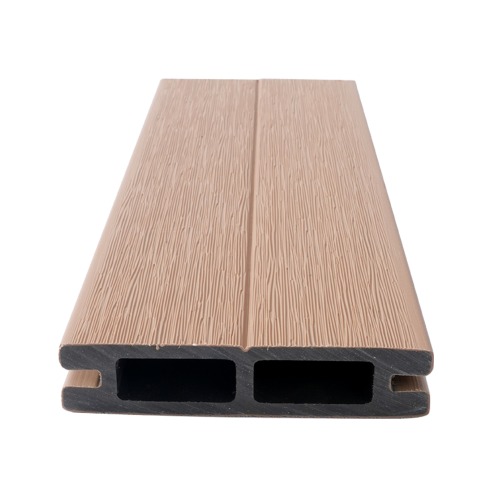
This article examines how co-extruded small co-extrusion board profiles perform in real outdoor conditions, which applications suit them best, and what buyers should check before placing a wholesale order.
Co-extrusion means two or more material layers are melted and shaped through the same die at the same time. For fencing, the core is typically a blend of wood fiber and polymer, chosen for stiffness and dimensional stability. The outer layer is a capped, pigmented polymer skin engineered for weather resistance.
The core handles load and screw-holding strength, while the cap protects against water intrusion and sun damage. Because both layers cool together, the bond is continuous rather than glued, which reduces delamination risk over years of thermal cycling.
A small co-extrusion profile is usually produced in a hollow or semi-hollow section. The hollow design lowers weight, makes handling easier on site and allows neat, concealed fastening. Typical face widths range from roughly 90 to 140 mm, which suits pickets, rails and infill panels.
Buyers evaluating WPC fencing usually focus on four performance areas. Each one maps directly to a common failure mode of traditional materials.
UV and weather resistance: The protective cap limits color fading and surface chalking under long sun exposure.
Moisture resistance: Sealed surfaces resist swelling and rot in humid or rainy climates.
Low maintenance: No painting or staining cycle is required, and routine washing is usually enough.
Environmental profile: Recycled fiber and polymer content reduces demand for virgin timber.
The right fence material depends on the setting. WPC fencing adapts well to several project types, each with different priorities for appearance, durability and budget.
Residential boundaries: Homeowners value privacy screens and low upkeep that keeps the yard looking tidy year round.
Commercial frontage: Offices, hotels and retail properties need a clean, consistent look that does not require frequent repainting.
Gardens and parks: Landscape projects benefit from natural tones and the ability to blend with planting and stone features.
Farmland and livestock areas: Moisture-resistant rails hold up better than untreated wood where animals and weather are constant stressors.
Projects that combine public visibility with limited maintenance budgets often find composite boards deliver the best long-term value.
Comparing materials side by side clarifies where each option fits. The table below summarizes typical performance across the criteria most buyers review.
| Criteria | Co-extruded WPC | Solid Timber | PVC | Metal |
|---|---|---|---|---|
| Weather resistance | High | Medium | High | Medium |
| Rot and corrosion | Very low | Requires treatment | Very low | Rust risk |
| Maintenance | Minimal | Frequent | Minimal | Coating renewal |
| Expected service life | 15 to 25 years | 8 to 15 years | 15 to 20 years | 10 to 25 years |
| Appearance | Wood-like | Natural wood | Plain or molded | Industrial |
Total cost of ownership often favors composite boards once repainting and replacement cycles are counted. Buyers comparing offers should request a full lifecycle estimate rather than comparing only the unit price per meter.
In moderate climates, well-made co-extruded boards commonly last between 15 and 25 years with only occasional cleaning. Harsh conditions such as constant saltwater exposure or extreme freeze-thaw cycles can shorten that range.
The protective outer cap is designed to limit fading and surface chalking. Some gradual color change is normal over many years, but a properly capped board retains its appearance far longer than uncapped alternatives.
Yes. Posts can be set at varying heights and rails can be stepped to follow slopes. Installers should allow for thermal expansion gaps at board ends and maintain drainage beneath the lowest rail.
Routine sealing or painting is generally unnecessary. Periodic washing with mild soap and water is usually sufficient to keep the surface clean and protected.
Many manufacturers can adjust profile dimensions, color tones and surface textures for bulk orders. Confirm tooling requirements, minimum quantities and lead times before finalizing the specification.

WPC PROCUREMENT GUIDE Making Better Decisions When Sourcing Wood-Plastic Composite Products How can importers, construction contractors and property ...
READ MOREWhy WPC Wall Panel Is Gaining Ground in Building Projects Architects, contractors and wholesale buyers are looking for wall materials that look like ...
READ MOREWhy Homeowners and Project Planners Are Turning to Wood-Plastic Composite Fences Anyone who has spent a few seasons caring for a traditional timber f...
READ MOREIntroduction Property owners, landscape designers and procurement teams are rethinking outdoor boundaries. Solid timber rots, metal rusts and plain p...
READ MORE
 No. 6, Nanyuan South Road, Tangyang Town Industrial Park, Dongtai City, China
 [email protected]
 +86-17388015349
Copyright © Jiangsu Xuanhui New Material Technology Co., Ltd. All Rights Reserved.Custom Wood Plastic Composite Environmentally Friendly Materials Factory

