

 English
 Español
 عربى
عربىWhat Is Second Generation Co-extrusion Flooring? Second generation co-extrusion flooring is a composite outdoor decking system built with a dual-laye...
READ MORE
Clean air, a human right
Wood plastic composite decking has become a common choice for outdoor and semi outdoor spaces because it blends the look of timber with the practicality of engineered material. Before committing to a purchase, it helps to understand what actually sits inside a board, since the internal composition determines how the product performs over years of sun, moisture, and foot traffic.
WPC flooring is manufactured by combining wood fibers, plastic polymers, and bonding agents under heat and pressure. The result is a dense board that resists many of the problems associated with solid timber, such as splintering, insect damage, and rapid rotting. However, not all boards on the market are made to the same standard, which is why a buyer needs a clear checklist rather than relying on appearance alone.
The ratio of wood fiber to plastic polymer inside a board affects both its rigidity and its resistance to moisture. Boards with a higher plastic content generally handle damp environments better, while a higher wood fiber content can improve the natural texture but may increase water absorption if the manufacturing process is not tightly controlled.
The wear layer is the top protective coating that shields the board from scratches, fading, and stains. A thin wear layer may look fine on day one but can show wear marks within a single season of regular use, particularly in commercial settings with heavy footfall.
| Wear Layer Thickness | Typical Use Case | Expected Scratch Resistance |
|---|---|---|
| 0.3mm to 0.5mm | Light residential areas | Moderate |
| 0.5mm to 0.7mm | Busy residential or light commercial | Good |
| 0.7mm and above | Commercial and high traffic zones | Excellent |
Buyers planning to install boards in high traffic corridors, retail spaces, or shared outdoor decks should prioritize a thicker wear layer, since replacement labor often costs more than the material upgrade itself.
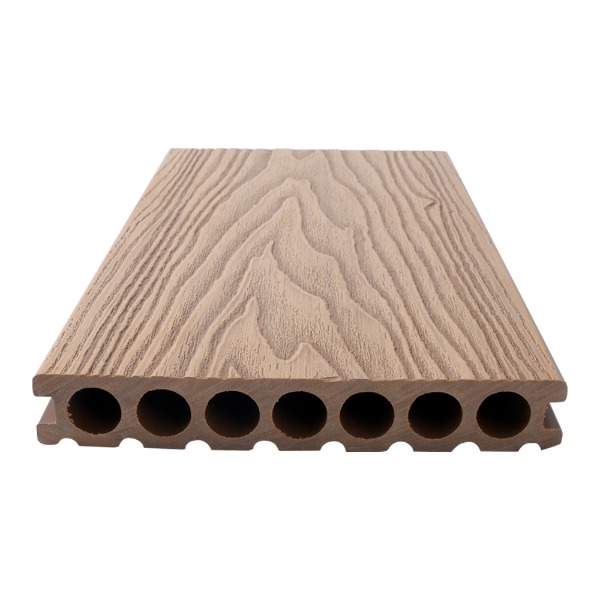
One of the most searched questions among buyers is whether this material can genuinely handle water exposure. The short answer is that quality boards are designed to resist moisture far better than traditional timber, but the degree of protection varies by product line.
Standard composite boards resist splashes and humidity but are not intended for constant submersion
Fully sealed waterproof wpc flooring variants use a closed cell core that blocks water absorption even in prolonged damp conditions
Boards with exposed wood fiber edges are more vulnerable at cut points and require sealing during installation
A board rated for outdoor decking is not automatically suitable for continuous water contact such as poolside coping or shower areas. Always check the specific moisture rating rather than assuming all composite products behave the same way.
Shoppers often come across both terms while researching and are unsure which suits their project. Understanding the spc vs wpc flooring distinction helps narrow the decision based on the space being renovated.
| Aspect | WPC Core | SPC Core |
|---|---|---|
| Core Material | Wood fiber and plastic blend | Limestone powder and plastic blend |
| Underfoot Feel | Softer, more cushioned | Harder, more rigid |
| Best Suited For | Comfort focused indoor or outdoor decking | High impact commercial flooring |
| Weight | Lighter | Heavier |
For homeowners who want a warmer, more forgiving surface underfoot, the wood fiber core tends to be preferred. For spaces expecting heavy equipment or constant rolling loads, the denser mineral core structure may hold up better over time.
Even a well made board will underperform if installed incorrectly. Checking the locking mechanism and subfloor requirements before purchase avoids costly rework.
Click lock flooring mechanisms allow boards to snap together without nails or adhesive, which speeds up installation and allows for expansion and contraction with temperature changes. This is particularly useful for outdoor decking exposed to seasonal shifts.
Subfloor conditions such as unevenness or trapped moisture can undermine even a premium board, so this step should never be skipped regardless of product quality.
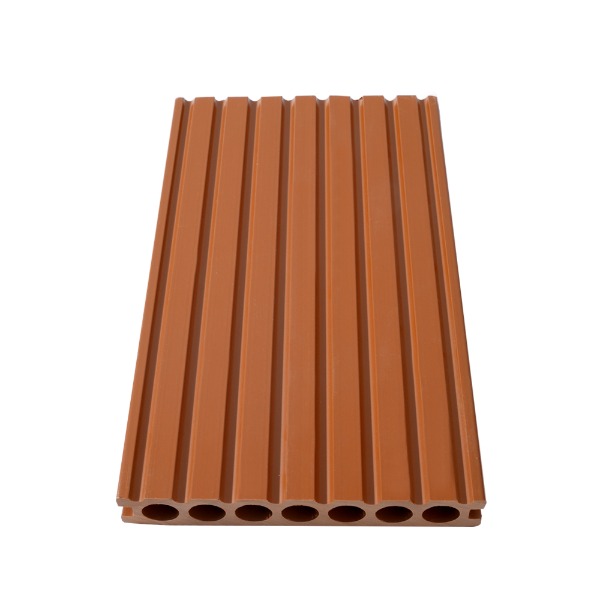
The environment where boards will be installed changes which specifications matter most. A board chosen for a quiet residential room does not need the same load rating as one destined for a busy retail floor.
Indoor wpc flooring for living areas often prioritizes comfort, sound dampening, and visual warmth over extreme load resistance. Lighter foot traffic means a moderate wear layer is usually sufficient.
Commercial wpc flooring needs to withstand rolling carts, frequent foot traffic, and occasional spills. This is where thicker wear layers and denser cores become a practical necessity rather than a luxury upgrade.
For projects where appearance is a priority alongside performance, luxury wpc flooring lines typically offer refined surface textures and a wider range of finishes, while still retaining the core durability benefits of composite construction.
Many buyers weigh composite boards against standard vinyl before deciding. Both fall under the umbrella of vinyl flooring alternative options, but they differ in construction and feel.
Vinyl flooring is typically thinner and more flexible, making it easier to install over slightly uneven surfaces
Composite boards offer more underfoot rigidity and a closer resemblance to natural wood texture
Vinyl often costs less upfront, while composite boards tend to offer a longer service life in outdoor or semi outdoor conditions
Neither option is universally better. The right choice depends on budget, expected traffic, and whether the installation is fully indoor or exposed to weather.
Buyers increasingly ask about environmental impact alongside performance. Many composite boards use recycled wood fiber and reclaimed plastic content, positioning them as a more sustainable option compared to virgin timber harvesting.
Consistent core density without air pockets or weak spots
UV stabilizers that reduce color fading from prolonged sun exposure
Properly sealed edges that prevent moisture from entering at cut points
Choosing eco friendly flooring does not have to mean compromising on strength. Reputable manufacturing processes can combine recycled content with the same density and wear resistance expected from standard composite boards.
15-25
Years typical service life for quality composite decking
0.3-0.7mm
Common wear layer thickness range across products
30-60
Percent recycled content in many composite formulations
No single specification tells the full story. A board with a thick wear layer but poor water sealing will still fail in a damp climate, while a fully waterproof board with a thin wear layer may scratch quickly in a busy hallway. Reviewing material composition, water resistance, structural core type, installation compatibility, and intended application together gives a far more reliable picture than judging by price or appearance alone.
Buyers evaluating wood plastic composite flooring for a specific project should request technical specification sheets rather than relying solely on marketing descriptions, since wear layer thickness and core density are not always visible from a sample swatch.
It is an engineered flooring material made by combining wood fiber, plastic polymers, and bonding agents into a dense board designed to resist moisture and wear better than solid timber.
Many boards are highly water resistant and some are fully waterproof, but the level of protection varies by product, so checking the specific moisture rating before purchase is important.
With proper installation and reasonable maintenance, quality boards commonly last between fifteen and twenty five years, depending on traffic levels and environmental exposure.
Yes, as long as the concrete subfloor is level, clean, and checked for excess moisture before installation begins.
Fully sealed waterproof variants can generally handle bathroom humidity and occasional splashes, but continuous standing water should still be avoided regardless of the product rating.
Scratch resistance depends largely on wear layer thickness, with thicker layers offering noticeably better protection in high traffic areas compared to thinner, budget oriented boards.

What Is Second Generation Co-extrusion Flooring? Second generation co-extrusion flooring is a composite outdoor decking system built with a dual-laye...
READ MOREWhy Outdoor Decking Fails Earlier Than Expected Many outdoor floors look fine on the day they are installed, then start to show problems within a fe...
READ MOREWall panels have become one of the most popular cladding solutions in modern renovation. Homeowners, contractors, and first-time DIYers are drawn to ...
READ MORECan I install wall panels in a bathroom? The short answer is yes, provided you choose a moisture-resistant panel, prepare the wall correctly, and sea...
READ MORE
 No. 6, Nanyuan South Road, Tangyang Town Industrial Park, Dongtai City, China
 [email protected]
 +86-17388015349
Copyright © Jiangsu Xuanhui New Material Technology Co., Ltd. All Rights Reserved.Custom Wood Plastic Composite Environmentally Friendly Materials Factory

